 BMW K 1200 GT Black Edition
Showing posts with label BMW. Show all posts
Showing posts with label BMW. Show all posts
The Giant Killer BMW S1000RR

Speed has to be kept under control. And motorcycle control is exactly what we have been constantly reinventing over the last 20 years. The S 1000 RR represents a milestone in electronic rider safety: ultra-lightweight ABS (2.5kg), which can be used in conjunction with the extremely efficient DTC dynamic traction control (available as an optional extra) – quite unique for 2009.
Racing ABS for all conditions
You couldn’t wish for a more discreet ABS; it has fine control intervals, is virtually imperceptible in its operation, and is light enough to satisfy fans of low-weight bikes.
DTC – transparent traction control you can rely on.
This dynamic feature reacts reliably and efficiently to speed, lean angle, and operating mode (rain, sport, race, or slick). It was specifically designed to be as effective on the road as it is on the racetrack.
Radially mounted Brembo brake callipers
This is how today’s superbikes decelerate. Not only do brake disks mounted directly on the wheel rims look good, they also reduce unsprung mass.
A superlative engine.
An extreme bore/stroke ratio (80x49.7mm) and rocker arm-actuated valves for great stability at high engine speeds, compact construction and lightweight design – a genuine powerhouse which demonstrates its considerably ability at all output levels.
IA design that doesn't just look good
Intelligently positioned slits behind the fairing minimise turbulence to allow the rider to maintain a relaxed head position, optimum air-flow around rider and bike ensures stability at top speed, while efficient flow-through makes for maximum cooling. Combined with plenty of eye-catching design features – that’s the way to do it.
Sporty seat positioning.
If you want to be fast, you have to adopt a relaxed racing posture. The way you sit must allow you to concentrate on the essential aspects of motorcycling – maximum enjoyment and perfect control. The looser you are on the bike, the easier everything else will be. Gone are the days when you had to bend yourself flat. Today's modern posture means you are actually sitting more in the bike than on it.
From model year 2011 the BMW S 1000 RR is available in the following new paint finishes:
•Shine yellow metallic
•Light grey metallic
The paint finishes Mineral silver metallic and Acid green metallic are no longer available

bikes in my hood

followed this vintage bmw with a side car the other day: nice.


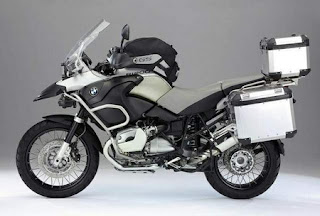
2011 BMW R1200GS Adventure
2011 BMW R1200GS Adventure Review
2011 BMW R1200GS Adventure is one motorcycle issued by the manufacturer BMW with Sportbike edition which supported the body design is comfortable to use. 2011 BMW R1200GS Adventure has a engine capacity 1,170 cc with Bore & Stroke 101 mm x 73 mm. For engine type Type Air/oil-cooled flat twin ('Boxer') 4-stroke engine, two camshafts and four radially aligned valves per cylinder, central balancer shaft.
 2011 BMW R1200GS Adventure 1
 2011 BMW R1200GS Adventure 2
 2011 BMW R1200GS Adventure 3
 2011 BMW R1200GS Adventure 4
 2011 BMW R1200GS Adventure 5
READ MORE - 2011 BMW R1200GS Adventure
2011 BMW R1200GS Adventure is one motorcycle issued by the manufacturer BMW with Sportbike edition which supported the body design is comfortable to use. 2011 BMW R1200GS Adventure has a engine capacity 1,170 cc with Bore & Stroke 101 mm x 73 mm. For engine type Type Air/oil-cooled flat twin ('Boxer') 4-stroke engine, two camshafts and four radially aligned valves per cylinder, central balancer shaft.
 2011 BMW R1200GS Adventure 1
 2011 BMW R1200GS Adventure 2
 2011 BMW R1200GS Adventure 3
 2011 BMW R1200GS Adventure 4
 2011 BMW R1200GS Adventure 5
2011 BMW R1200GS Adventure - Specifications
USA MSRP: $17,000 USD
Canada MSRP: See Dealer for Current Pricing
Engine
Type Air/oil-cooled flat twin ('Boxer') 4-stroke engine, two camshafts and four radially aligned valves per cylinder, central balancer shaft
Bore x stroke 101 mm x 73 mm
Capacity 1,170 cc
Rated output 110 hp (81 kW) at 7,750 rpm
Max. torque 88 ft-lb (120 Nm) at 6,000 rpm
Compression ratio 12.0 : 1
Mixture control / engine management Electronic intake pipe injection / BMS-K+ digital engine management with overrun fuel cut-off, twin spark ignition
Emission control Closed-loop 3-way catalytic converter, emission standard EU-3
Performance / fuel consumption
Maximum speed over 120 mph (200 km/h)
Fuel consumption per 100 km at constant 90 km/h City: 43.3 mpg (4.6 l Euro)
Fuel consumption per 100 km at constant 120 km/h Highway: 51.1 mpg (6.1 l Euro)
Fuel type Unleaded super and premium, octane number 91-93
Electrical system
Alternator three-phase alternator 720 W
Battery 12 V / 14 Ah, maintenance-free
Power transmission
Clutch Single dry plate clutch, hydraulically operated
Gearbox Constant mesh 6-speed gearbox with helical gear teeth
Drive Shaft drive
Chassis / brakes
Frame Two-section frame consisting of front and rear sections, load- bearing engine-gearbox unit
Front wheel location / suspension BMW Motorrad Telelever; stanchion diameter 41 mm, central spring strut, spring pre-load with 5-position mechanical adjustment
Rear wheel location / suspension Cast aluminium single-sided swing arm with BMW Motorrad Paralever; WAD strut (travel-related damping), spring pre-load hydraulically adjustable (continuously variable) at handwheel, rebound damping adjustable
Suspension travel front / rear 8.2/8.6 inches (210/220 mm)
Wheelbase 59.4 inches (1,510 mm)
Castor 89 mm
Steering head angle 65.2°
Wheels Cross-spoke wheels
Rim, front 2.50 x 19"
Rim, rear 4.00 x 17"
Tyres, front 110/80 R 19
Tyres, rear 150/70 R 17
Brake, front Dual disc brake, floating brake discs, diameter 305 mm, 4-piston fixed calipers
Brake, rear Single disc brake, diameter 265 mm, double-piston floating caliper
ABS Optional extra: BMW Motorrad Integral ABS (part-integral), can be switched off
Dimensions / weights
Length 2,240 mm
Width (incl. mirrors) 990 mm
Height (excl. mirrors) 1,525 mm
Seat height, unladen weight 35/35.8 inches (890 / 910 mm)
Inner leg curve, unladen weight 1,960 / 2,000 mm
Unladen weight, road ready, fully fuelled 1) 564 lbs (256 kg)
Dry weight 2) 491 lbs (223 kg)
Permitted total weight 1,047 lbs (475 kg)
Payload (with standard equipment) 482 lbs (219 kg)
Usable tank volume 8.7 gallons (33 l)
Reserve approx. 1 gallon (4.0 l)
Technical data relate to the unladen weight (DIN)
1) According to guideline 93/93/EWG with all fluids, fuelled with at least 90% of usable tank volume
2) Unladen weight without fluids
USA MSRP: $17,000 USD
Canada MSRP: See Dealer for Current Pricing
Engine
Type Air/oil-cooled flat twin ('Boxer') 4-stroke engine, two camshafts and four radially aligned valves per cylinder, central balancer shaft
Bore x stroke 101 mm x 73 mm
Capacity 1,170 cc
Rated output 110 hp (81 kW) at 7,750 rpm
Max. torque 88 ft-lb (120 Nm) at 6,000 rpm
Compression ratio 12.0 : 1
Mixture control / engine management Electronic intake pipe injection / BMS-K+ digital engine management with overrun fuel cut-off, twin spark ignition
Emission control Closed-loop 3-way catalytic converter, emission standard EU-3
Performance / fuel consumption
Maximum speed over 120 mph (200 km/h)
Fuel consumption per 100 km at constant 90 km/h City: 43.3 mpg (4.6 l Euro)
Fuel consumption per 100 km at constant 120 km/h Highway: 51.1 mpg (6.1 l Euro)
Fuel type Unleaded super and premium, octane number 91-93
Electrical system
Alternator three-phase alternator 720 W
Battery 12 V / 14 Ah, maintenance-free
Power transmission
Clutch Single dry plate clutch, hydraulically operated
Gearbox Constant mesh 6-speed gearbox with helical gear teeth
Drive Shaft drive
Chassis / brakes
Frame Two-section frame consisting of front and rear sections, load- bearing engine-gearbox unit
Front wheel location / suspension BMW Motorrad Telelever; stanchion diameter 41 mm, central spring strut, spring pre-load with 5-position mechanical adjustment
Rear wheel location / suspension Cast aluminium single-sided swing arm with BMW Motorrad Paralever; WAD strut (travel-related damping), spring pre-load hydraulically adjustable (continuously variable) at handwheel, rebound damping adjustable
Suspension travel front / rear 8.2/8.6 inches (210/220 mm)
Wheelbase 59.4 inches (1,510 mm)
Castor 89 mm
Steering head angle 65.2°
Wheels Cross-spoke wheels
Rim, front 2.50 x 19"
Rim, rear 4.00 x 17"
Tyres, front 110/80 R 19
Tyres, rear 150/70 R 17
Brake, front Dual disc brake, floating brake discs, diameter 305 mm, 4-piston fixed calipers
Brake, rear Single disc brake, diameter 265 mm, double-piston floating caliper
ABS Optional extra: BMW Motorrad Integral ABS (part-integral), can be switched off
Dimensions / weights
Length 2,240 mm
Width (incl. mirrors) 990 mm
Height (excl. mirrors) 1,525 mm
Seat height, unladen weight 35/35.8 inches (890 / 910 mm)
Inner leg curve, unladen weight 1,960 / 2,000 mm
Unladen weight, road ready, fully fuelled 1) 564 lbs (256 kg)
Dry weight 2) 491 lbs (223 kg)
Permitted total weight 1,047 lbs (475 kg)
Payload (with standard equipment) 482 lbs (219 kg)
Usable tank volume 8.7 gallons (33 l)
Reserve approx. 1 gallon (4.0 l)
Technical data relate to the unladen weight (DIN)
1) According to guideline 93/93/EWG with all fluids, fuelled with at least 90% of usable tank volume
2) Unladen weight without fluids
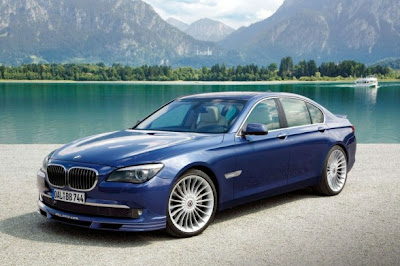
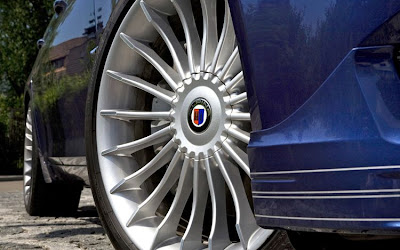
2011 BMW Alpina B7 Car Design Pictures
 2011 BMW Alpina B7 Front View
 2011 BMW Alpina B7 Luxury Car
 2011 BMW Alpina B7 Wheel
 2011 BMW Alpina B7 Side View
 2011 BMW Alpina B7 Interior
 2011 BMW Alpina B7 First Drive
 2011 BMW Alpina B7 Engine
 2011 BMW Alpina B7 Rear View
 2011 BMW Alpina B7 Photo
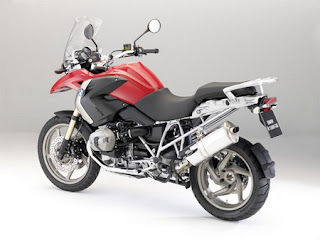
2011 BMW R1200GS
2011 BMW R1200GS Review
 2011 BMW R1200GS 1
 2011 BMW R1200GS 2
 2011 BMW R1200GS 3
 2011 BMW R1200GS 4
 2011 BMW R1200GS 5
2011 BMW R1200GS - Specifications
USA MSRP: $14,950 USD
Canada MSRP: See Dealer for Current Pricing
Engine
Type Air/oil-cooled flat twin ('Boxer') 4-stroke engine, two camshafts and four radially aligned valves per cylinder, central balancer shaft
Bore x stroke 101 mm x 73 mm
Capacity 1,170 cc
Rated output 110 hp (81 kW) at 7,750 rpm
Max. torque 88 ft-lb (120 Nm) at 6,000 rpm
Compression ratio 12.0 : 1
Mixture control / engine management Electronic intake pipe injection / BMS-K+ digital engine management with overrun fuel cut-off, twin spark ignition
Emission control Closed-loop 3-way catalytic converter, emission standard EU-3
Performance / fuel consumption
Maximum speed over 120 mph (200 km/h)
Fuel consumption per 100 km at constant 90 km/h City: 43.4 mpg (4.3 l Euro)
Fuel consumption per 100 km at constant 120 km/h Highway: 57.4 mpg (5.5 l Euro)
Fuel type Unleaded super and premium, octane number 91-93
Electrical system
Alternator three-phase alternator 720 W
Battery 12 V / 14 Ah, maintenance-free
Power transmission
Clutch Single dry plate clutch, hydraulically operated
Gearbox Constant mesh 6-speed gearbox with helical gear teeth
Drive Shaft drive
Chassis / brakes
Frame Two-section frame consisting of front and rear sections, load- bearing engine-gearbox unit
Front wheel location / suspension BMW Motorrad Telelever; stanchion diameter 41 mm, central spring strut, spring preload with 5-position mechanical adjustment
Rear wheel location / suspension Cast aluminium single-sided swing arm with BMW Motorrad Paralever; WAD strut (travel-related damping), spring pre-load hydraulically adjustable (continuously variable) at handwheel, rebound damping adjustable
Suspension travel front / rear 7.5/7.9 inches (190/200 mm)
Wheelbase 59.3 inches (1,507 mm)
Castor 101 mm
Steering head angle 64.3°
Wheels Cast aluminum wheels
Rim, front 2.50 x 19"
Rim, rear 4.00 x 17"
Tyres, front 110/80 R 19
Tyres, rear 150/70 R 17
Brake, front Dual disc brake, floating brake discs, diameter 305 mm, 4-piston fixed calipers
Brake, rear Single disc brake, diameter 265 mm, double-piston floating caliper
ABS Optional extra: BMW Motorrad Integral ABS (part-integral), can be switched off
Dimensions / weights
Length 2,210 mm
Width (incl. mirrors) 915 mm
Height (excl. mirrors) 1,450 mm
Seat height, unladen weight 33.5/34.2 inches (850 / 870 mm), low seat 32.3" (820 mm), lowered suspension 31" (790 mm)
Inner leg curve, unladen weight 1,890 / 1,940 mm (low seat 1,820 mm, lowered suspension 1,760 mm)
Unladen weight, road ready, fully fuelled 1) 504 lbs (229 kg)
Dry weight 2) 447 lbs (203 kg)
Permitted total weight 970 lbs (440 kg)
Payload (with standard equipment) 465 lbs (211 kg)
Usable tank volume 5.3 gallons (20 l)
Reserve approx 1 gallon (4.0 l)
Technical data relate to the unladen weight (DIN)
1) According to guideline 93/93/EWG with all fluids, fuelled with at least 90% of usable tank volume
2) Unladen weight without fluids
READ MORE - 2011 BMW R1200GS
2011 BMW R1200GS is one motorcycle issued by the manufacturer BMW with adventure edition which supported the body design is comfortable to use. 2011 BMW R1200GS has a engine capacity 1,170 cc with Bore & Stroke 101 mm x 73 mm. For engine type Type Air/oil-cooled flat twin ('Boxer') 4-stroke engine, two camshafts and four radially aligned valves per cylinder, central balancer shaft.
 2011 BMW R1200GS 1
 2011 BMW R1200GS 2
 2011 BMW R1200GS 3
 2011 BMW R1200GS 4
 2011 BMW R1200GS 5
2011 BMW R1200GS - Specifications
USA MSRP: $14,950 USD
Canada MSRP: See Dealer for Current Pricing
Engine
Type Air/oil-cooled flat twin ('Boxer') 4-stroke engine, two camshafts and four radially aligned valves per cylinder, central balancer shaft
Bore x stroke 101 mm x 73 mm
Capacity 1,170 cc
Rated output 110 hp (81 kW) at 7,750 rpm
Max. torque 88 ft-lb (120 Nm) at 6,000 rpm
Compression ratio 12.0 : 1
Mixture control / engine management Electronic intake pipe injection / BMS-K+ digital engine management with overrun fuel cut-off, twin spark ignition
Emission control Closed-loop 3-way catalytic converter, emission standard EU-3
Performance / fuel consumption
Maximum speed over 120 mph (200 km/h)
Fuel consumption per 100 km at constant 90 km/h City: 43.4 mpg (4.3 l Euro)
Fuel consumption per 100 km at constant 120 km/h Highway: 57.4 mpg (5.5 l Euro)
Fuel type Unleaded super and premium, octane number 91-93
Electrical system
Alternator three-phase alternator 720 W
Battery 12 V / 14 Ah, maintenance-free
Power transmission
Clutch Single dry plate clutch, hydraulically operated
Gearbox Constant mesh 6-speed gearbox with helical gear teeth
Drive Shaft drive
Chassis / brakes
Frame Two-section frame consisting of front and rear sections, load- bearing engine-gearbox unit
Front wheel location / suspension BMW Motorrad Telelever; stanchion diameter 41 mm, central spring strut, spring preload with 5-position mechanical adjustment
Rear wheel location / suspension Cast aluminium single-sided swing arm with BMW Motorrad Paralever; WAD strut (travel-related damping), spring pre-load hydraulically adjustable (continuously variable) at handwheel, rebound damping adjustable
Suspension travel front / rear 7.5/7.9 inches (190/200 mm)
Wheelbase 59.3 inches (1,507 mm)
Castor 101 mm
Steering head angle 64.3°
Wheels Cast aluminum wheels
Rim, front 2.50 x 19"
Rim, rear 4.00 x 17"
Tyres, front 110/80 R 19
Tyres, rear 150/70 R 17
Brake, front Dual disc brake, floating brake discs, diameter 305 mm, 4-piston fixed calipers
Brake, rear Single disc brake, diameter 265 mm, double-piston floating caliper
ABS Optional extra: BMW Motorrad Integral ABS (part-integral), can be switched off
Dimensions / weights
Length 2,210 mm
Width (incl. mirrors) 915 mm
Height (excl. mirrors) 1,450 mm
Seat height, unladen weight 33.5/34.2 inches (850 / 870 mm), low seat 32.3" (820 mm), lowered suspension 31" (790 mm)
Inner leg curve, unladen weight 1,890 / 1,940 mm (low seat 1,820 mm, lowered suspension 1,760 mm)
Unladen weight, road ready, fully fuelled 1) 504 lbs (229 kg)
Dry weight 2) 447 lbs (203 kg)
Permitted total weight 970 lbs (440 kg)
Payload (with standard equipment) 465 lbs (211 kg)
Usable tank volume 5.3 gallons (20 l)
Reserve approx 1 gallon (4.0 l)
Technical data relate to the unladen weight (DIN)
1) According to guideline 93/93/EWG with all fluids, fuelled with at least 90% of usable tank volume
2) Unladen weight without fluids
2011 BMW Z4 Car Design Gallery 225RXDNDV6T7
 2011 BMW Z4 Front View
 2011 BMW Z4 First Look
 2011 BMW Z4 Headlight
 2011 BMW Z4 Steering Wheel
 2011 BMW Z4 Side View
 2011 BMW Z4 Interior
 2011 BMW Z4 Rear View
 2011 BMW Z4 Sport Car
 2011 BMW Z4 Wheel
 2011 BMW Z4 Engine
 2011 BMW Z4 Test Road
 2011 BMW Z4 Taillight

BMW K 1300 GT Tour Edition
BMW K 1300 GT Tour Edition Review :
BMW K 1300 GT Tour Edition is one of the type issued by the motorcycle manufacturer BMW with tour edition. This motorcycle has a capacity of 1293 cc engine with a ratio of Bore x stroke 80 mm x 64.3 mm. For the type of engine That Is a water-cooled 4-stroke in-line four-cylinder, four valves per cylinder, two overhead camshafts, dry sump lubrication.
Time machine - the latest news.
The BMW K 1300 GT.
Gran Tourismo - or in the case of the BMW K 1300 GT quite simply one of the fastest movers around. It opens up a new era in the timing of long distances. Nonetheless: impressive though the average travel times may be on this machine, its performance is also fascinating at low speeds, for example after a hairpin bend. This is because at engine speeds you operate in more than 80% of the time on the road – i.e. the lower and middle ranges – this engine adds something you can feel instantly: 99 lb/ft from 1,293 cc. No ifs or buts. And 160 hp for the three-lane motorway. The fact that this in-line 4-cylinder is very low-key when it comes to fuel consumption and exhaust emissions makes fast travel even more pleasing. And it also demonstrates once again how modern engines ought to be built.
The success formula GT is the sum of many intelligent details: top ergonomics - both at front and rear, exemplary aerodynamics and weather protection, safety (ABS as standard, ASC as an option) which sets standards. And a level of comfort which enables relaxed, supreme travel. Then there is a high-precision chassis with a low centre of gravity, as well as optional ESA II to adapt the chassis mode at the press of a button. So here’s a tip: save yourself the effort of looking for an alternative. Get into gear right away.
The BMW K 1300 GT: dynamic performance has never been more stylish.
BMW K 1300 GT Tour Edition is one of the type issued by the motorcycle manufacturer BMW with tour edition. This motorcycle has a capacity of 1293 cc engine with a ratio of Bore x stroke 80 mm x 64.3 mm. For the type of engine That Is a water-cooled 4-stroke in-line four-cylinder, four valves per cylinder, two overhead camshafts, dry sump lubrication.
Time machine - the latest news.
The BMW K 1300 GT.
Gran Tourismo - or in the case of the BMW K 1300 GT quite simply one of the fastest movers around. It opens up a new era in the timing of long distances. Nonetheless: impressive though the average travel times may be on this machine, its performance is also fascinating at low speeds, for example after a hairpin bend. This is because at engine speeds you operate in more than 80% of the time on the road – i.e. the lower and middle ranges – this engine adds something you can feel instantly: 99 lb/ft from 1,293 cc. No ifs or buts. And 160 hp for the three-lane motorway. The fact that this in-line 4-cylinder is very low-key when it comes to fuel consumption and exhaust emissions makes fast travel even more pleasing. And it also demonstrates once again how modern engines ought to be built.
The success formula GT is the sum of many intelligent details: top ergonomics - both at front and rear, exemplary aerodynamics and weather protection, safety (ABS as standard, ASC as an option) which sets standards. And a level of comfort which enables relaxed, supreme travel. Then there is a high-precision chassis with a low centre of gravity, as well as optional ESA II to adapt the chassis mode at the press of a button. So here’s a tip: save yourself the effort of looking for an alternative. Get into gear right away.
The BMW K 1300 GT: dynamic performance has never been more stylish.
 BMW K 1300 GT Tour 1
 BMW K 1300 GT Tour 2
 BMW K 1300 GT Tour 3
BMW K 1300 GT Tour Edition Technical Data : Engine
Type Water-cooled 4-stroke in-line four-cylinder, four valves per cylinder, two overhead camshafts, dry sump lubrication
Bore x stroke 80 mm x 64.3 mm
Capacity 1.293 cc
Rated output 160 hp (118 kW) at 9,000 rpm
Max. torque 99 lb/ft (135 Nm) at 8,000 rpm
Compression ratio 13.0 : 1
Mixture control / engine management Electronic intake pipe injection/digital engine management including knock sensor (BMS-K)
Emission control Closed-loop 3-way catalytic converter, emission standard EU-3
Performance / fuel consumption
Maximum speed Over 125 m.p.h. (200 km/h)
Fuel consumption per 100 km at constant 90 km/h 5,0 l
Fuel consumption per 100 km at constant 120 km/h 5,9 l
Fuel type Unleaded Premium
Electrical system
Alternator three-phase alternator 945 W
Battery 12 V / 19 Ah, maintenace-free
Power transmission
Clutch Multiple-disc clutch in oil bath, hydraulically operated
Gearbox Constant mesh 6-speed gearbox
Drive Shaft drive
Chassis / brakes
Frame Bridge-type frame, cast aluminium, load-bearing engine
Front wheel location / suspension BMW Motorrad Duolever; central spring strut
Rear wheel location / suspension Cast aluminium single-sided swing arm with BMW Motorrad Paralever; central spring strut with lever system, spring pre-load hydraulically adjustable (continuously variable) at handwheel, adjustable rebound damping
Suspension travel front / rear 4.5 in. / 5.3 in. (115 mm / 135 mm)
Wheelbase 61.9 inches (1,572 mm)
Castor 4.4 inches (112 mm)
Steering head angle 60.6°
Wheels Cast aluminium
Rim, front 3,50 x 17"
Rim, rear 5,50 x 17"
Tyres, front 120/70 ZR 17
Tyres, rear 180/55 ZR 17
Brake, front Twin disc, floating brake discs, diameter 320 mm, 4-piston fixed calipers
Brake, rear Single disc, diameter 294 mm, double-piston floating caliper
ABS Standard equipment: BMW Motorrad Integral ABS (part-integral)
Dimensions / weights
Length 91.3 inches (2318 mm)
Width (incl. mirrors) 38 inches (965 mm) (incl. panniers: 39 inches [990 mm])
Height (excl. mirrors) 56.6 inches (1,438 mm)
Seat height, unladen weight 32.3 inches / 33.1 inches (low seat: 31.5 inches /32.3 inches)
Inner leg curve, unladen weight 70.8 inches / 72.4 inches (low seat: 69.3 inches / 70.8 inches)
Unladen weight, road ready, fully fuelled 1) 635 lbs (288 kg)
Dry weight 2) 562 lbs (255 kg)
Permitted total weight 1147 lbs (520 kg)
Payload (with standard equipment) 511 lbs (232 kg)
Usable tank volume 6.3 U.S. gallons (24 l)
Reserve approx. 1 U.S. gallon (4.0 l)
K 1300 GT: Pricing, Options and Accessories
Base MSRP: $19,150
Premium Package: $22,595
* Xenon Light
* ESA II
* Heated Seats
* Heated Grips
* Tire Pressure Monitor (TPM)
* Cruise Control
* On Board Computer
* ASC (Traction Control)
Options
* Xenon Light: $500
* ESA II: $900
* Heated Seat: $350
* Heated Grips: $300
* Tire Pressure Monitor (TPM): $250
* Cruise Control: $450
* On Board Computer: $295
* Anti-Theft Alarm: $395
* ASC: $400
* Low Seat (31.5 - 32.3 inches): n/c
Colors Bike
1. Magnesium Beige Metallic
2. Royal Blue Metallic
3. Red Apple Metallic
BMW F 800 ST Tour
BMW F 800 ST Tour Review :
F 800 ST
This middleweight definitely goes the distance.
The twisties are yours to devour anywhere in the country aboard the new 85 bhp F 800 ST, which is the touring version of the lithe new F 800. With a full fairing, high windshield and touring oriented ergonomics with raised handlebars, bombing down any road you choose is as comfortable as it is thrilling. Two 320 mm diameter front brake disk and Brembo four piston hydraulic calipers, and with optional ABS every ride stopping power is guaranteed. Add optional touring cases and heated grips and you've got a bike that is fast, flickable, and above extraordinarily capable. No matter where you want to ride, the sharp-handling F 800 ST gets you there, mile after mile.
F 800 ST
This middleweight definitely goes the distance.
The twisties are yours to devour anywhere in the country aboard the new 85 bhp F 800 ST, which is the touring version of the lithe new F 800. With a full fairing, high windshield and touring oriented ergonomics with raised handlebars, bombing down any road you choose is as comfortable as it is thrilling. Two 320 mm diameter front brake disk and Brembo four piston hydraulic calipers, and with optional ABS every ride stopping power is guaranteed. Add optional touring cases and heated grips and you've got a bike that is fast, flickable, and above extraordinarily capable. No matter where you want to ride, the sharp-handling F 800 ST gets you there, mile after mile.
 BMW F 800 ST 1
 BMW F 800 ST 2
 BMW F 800 ST 3
Engine
Type Water-cooled, 2-cylinder, 4-stroke, four valves per cylinder, two overhead camshafts, dry sump lubrication
Bore x stroke 82 mm x 75.6 mm
Capacity 798 cc
Rated output 85 hp (62.5 kW) at 8,000 rpm (output reduction to 34 hp (25 kW) at 7,000 rpm possible)
Max. torque 63 lb/ft (86 Nm) at 5,800 rpm (with output reduction: 40.3 lb/ft [55 Nm] at 3,500 rpm)
Compression ratio 12.0 : 1
Mixture control / engine management Electronic intake pipe injection / digital engine management (BMS-K)
Emission control Closed-loop 3-way catalytic converter, emission standard EU-3
Performance / fuel consumption
Maximum speed Over 125 mph (200 km/h)
Fuel consumption per 100 km at constant 90 km/h 3.4 l
Fuel consumption per 100 km at constant 120 km/h 4.4 l
Fuel type Unleaded Premium
Electrical system
Alternator three-phase alternator 400 W
Battery 12 V / 14 Ah, maintenance-free
Power transmission
Clutch Multiple-disc clutch in oil bath, mechanically operated
Gearbox Constant mesh 6-speed gearbox integrated into crankcase
Drive Belt drive with shock damper
Chassis / brakes
Frame Bridge-type aluminium frame, load-bearing engine
Front wheel location / suspension Telescopic fork, Ø 43 mm
Rear wheel location / suspension Cast aluminium single-sided swing arm with eccentric adjustment for rear axle, central spring strut, spring pre-load hydraulically adjustable (continuously variable) at handwheel, rebound damping adjustable
Suspension travel front / rear 5.5 inches (140 mm) / 5.5 inches (140 mm)
Wheelbase 57.7 inches (1466 mm)
Castor 3.7 inches (95 mm)
Steering head angle 64.2°
Wheels Cast aluminium
Rim, front 3.50 x 17"
Rim, rear 5.50 x 17"
Tyres, front 120/70 ZR 17
Tyres, rear 180/55 ZR 17
Brake, front Twin disc, floating brake discs, diameter 320 mm, four-piston fixed calipers
Brake, rear Single disc, diameter 265 mm, single-piston floating caliper
ABS Optional extra: BMW Motorrad ABS
Dimensions / weights
Length 82 inches (2082 mm) / 86.4 inches (2195 mm)
Width (incl. mirrors) 31.4 inches (860 mm)
Height (excl. mirrors) 45.4 inches (1155 mm) / 48.2 inches (1225 mm)
Seat height, unladen weight 32.3 inches (820 mm) (low seat: 31.1 inches [790 mm])
Inner leg curve, unladen weight 71.3 inches (1810 mm) (low seat: 68.7 inches [1745 mm])
Unladen weight, road ready, fully fuelled 1) 450 lbs (204 kg) / 461 lbs (209 kg)
Dry weight 2) 401 lbs (182 kg) / 412 lbs (187 kg)
Permitted total weight 893 lbs (405 kg)
Payload (with standard equipment) 443 lbs (201 kg) / 432 lbs (196 kg)
Usable tank volume 4.1 U.S. gallons (16.0 l)
Reserve approx. 1 U.S. gallon (4.0 l)
Color Bike
Sapphire Black Metallic
Light Gray Metallic/Sapphire Black Metallic/Granite Grey Metallic
Sapphire Black Metallic
F 800 ST: Pricing, Options and Accessories
Base MSRP: $10,990
Standard Package: $12,725
* Sport saddle bags w/ single key locking system
* Heated Grips
* ABS
* On Board Computer
* Center Stand
* Saddle bag mounts
Touring Package: $660 (Touring package contents cannot be modified.)
* Sport saddle bags w/ single key locking system
* Heated grips
* On Board Computer
* Saddle bag mounts
Options
* Sport Saddle Bags with single key locking (can only be ordered as part of Touring Package): $0
* Low Suspension including Low Seat (29.9 inches): $250
* Heated Grips: $250
* ABS: $900
* Tire Pressure Monitor (TPM): $250
* On Board Computer: $295
* Anti-Theft Alarm: $395
* Center Stand: $175
* Saddle Bag Mounts: $150
* Low Seat (31.1 inches): $N/C
motorsport modification | motorcycle news update | new motor bikes |BMW Tries Subliminal Advertising Experiment for the BMW S 1000 RR
With the occasion of promoting the BMW S1000 RR sport bike, the manufacturer decided to try something different than the usual commercial, especially considering how technology has evolved. For this reason, the Serviceplan company was chosen to add some subliminal advertising to the clip. See bellow the explanation and full ad.
The Munich-based company used what’s known as an after-image to print the BMW logo on the eyes of the audience that attended the experiment but the logo wasn’t visible on the screen and couldn’t be seen until Ruben Xaus, the star of the clip, gave the magic command “Close your eyes”. When the members of the audience closed their eyes, the logo instantly appeared to everyone’s amazement.
A lot of positive feedback was provided at the end of the screening and this may be an interesting way of promoting something without actually showing any logos. It will be interesting to see if BMW will integrate this in further screenings.
See bellow the same ad, but bear in mind the fact that it was screened in a cinema so you may not experience the same effect as those who whitnessed it firsthand.
READ MORE - motorsport modification | motorcycle news update | new motor bikes |BMW Tries Subliminal Advertising Experiment for the BMW S 1000 RR

The Munich-based company used what’s known as an after-image to print the BMW logo on the eyes of the audience that attended the experiment but the logo wasn’t visible on the screen and couldn’t be seen until Ruben Xaus, the star of the clip, gave the magic command “Close your eyes”. When the members of the audience closed their eyes, the logo instantly appeared to everyone’s amazement.
A lot of positive feedback was provided at the end of the screening and this may be an interesting way of promoting something without actually showing any logos. It will be interesting to see if BMW will integrate this in further screenings.
See bellow the same ad, but bear in mind the fact that it was screened in a cinema so you may not experience the same effect as those who whitnessed it firsthand.


motor sports |motoGP |motorcycle modification news update | 2010 BMW S1000RR First Ride

Know for the high-performance capabilities of its autos, has BMW finally found the ultimate driving machine on two-wheels with its S1000RR literbike?
‘The Ultimate Driving Machine.’ BMW has touted such a statement to describe its four-wheeled vehicles for decades. And for good reason. The German firm’s line of cars, from family sedans to M performance machines, has always been on the cutting edge of performance and drivability. Could the same be said for their motorcycles, though? In a true sporting sense, No. While they have dominated areas like adventure riding with its GS line and long-distance touring with the LT range, a purebred sportbike has always eluded the Bavarian brand, something that has perplexed us for years. Until now. Enter the 2010 BMW S1000RR.
And as such, no amount of terrible airline food or long layovers could stop us from riding the highly touted new machine, which is why this story is coming to you straight from a hotel room in Portugal, mere hours after riding the new propeller-branded bombshell.
So, without further ado…
Engine
Let’s start at the heart of the beast, the essence of what BMW has always been known for. And while it may not be a strange Boxer motor, the somewhat traditional Inline-Four was designed and built 100% in-house in BMW’s Berlin facility. In fact, the entire motorcycle is built in its German super facility.

BMW took the Inline-Four approach for its Superbike project, but features more oversquare configuration at 80 x 49.7mm.

The 33.5mm intake and 27.3mm exhaust valves are made from lightweight titanium and feature a narrow valve angle. The valve springs are supplemented by a hydraulic tightening mechanism to eliminate valve flotation.
These prancing ponies come via 999cc lump. Sporting a an extremely oversquare 80 x 49.7mm bore and stroke, this equates to a very short stoke ratio of 0.621 and the biggest bore of any 1K sportbike on the market. A forged, single-piece and heat-treated steel crankshaft is mated to “anti-friction” bearings and features traditional 180-degree angles for a consistent firing order. Con-rods are also steel, but are said to be an “extra-light” forged makeup, weighting 334 grams each. At the end of each of these sit forged lightweight “box” pistons with a thin-ring design for less dynamic friction. Each piston weights a mere 253 grams as well, further reducing internal rotational mass.
This is all housed in a horizontally split aluminum crankcase, the upper section die-cast to form a stiff overall unit. This upper half also holds a very small 6-speed stacked gearbox which mates to a wet slipper clutch. Above sits a cylinder block featuring nikasil coating for reduced friction and wear, while a compact cylinder head features a narrow valve angle (11.2 degree intake and 13.3 degree exhaust), claimed to “provide ideal intake ducts as well as a compact combustion chamber for high compression.”
Both intake and exhaust valves are lightweight titanium and measure a rather large 33.5mm intake and 27.3mm exhaust. These are operated by valve springs as well as a hydraulic tightening mechanism to reduce drag forces and allow power to be produced at high rpms without the chance of valve flotation. Small and light individual cam followers are also utilized to allow BMW the freedom to optimize valve lift and duration. This all equates to an astronomic – in liter-bike street terms – redline of 14,200 rpm, of which BMW says the engine could be run much higher in pure mechanical terms – i.e. if long-term street durability wasn’t a factor.
Cylinders bank forward at a 32-degree angle, which was obtainable due to the extremely small overall size of the engine. Despite the large 80mm bore the powerplant only measures 18.23 inches wide at the crankshaft. Height is also a vertically challenged 22 inches top to bottom, allowing low and “optimum” placement within the chassis. Another byproduct of this size is a featherweight 131.8-lb engine weight, said to be the lightest of the any stock 1000cc sportbike currently produced.

Producing a claimed 193 horsepower at the crank, the S1000RR clocked top speeds during our first ride in excess of 180mph in Portugal.
With a compression ration of 13:1, the final result is a lump that produces a claimed whopping 193 hp at the crank, which BMW say translates to roughly 180 hp at the wheel. While this may be a tad optimistic (we’re guessing in the 170 hp range), compared to the best we’ve seen of low 160s from the Japanese and it’s easy to see the difference.
And while the following may sound like a bit of regurgitated PR, one run down the front straight at Portimao and it all quickly became quite believable. From as low as 3000rpm right up to the 14K redline she pulls like a factory Superbike dressed in drag.
As it happens, I personally just returned from riding all seven factory World Superbikes at the some Portimao circuit less than three weeks ago, making for a perfect comparison. To give to an example of the new BMW’s engine performance, my top speed on Ben Spies’ factory Yamaha R1 was 301 km/h (187 mph) at the end of the massive front straight, and according to the data on the stock S1000RR I clocked high 280s with ease and a peak of 289 km/h (180 mph), a mere 12 Km/h (7 mph) down on the world championship-winning machine. To say this is impressive is an understatement. These speeds on the stock Beemer were also equally as quick as the factory-supported Kawasaki WSBK I rode at the same time. Unreal!
But power without control is nothing. And making the S1000RR even better is the smooth progression in which the heaps of hp are delivered. Fuel delivery is spot-on from as low as 1000 rpm and at no point are there any hiccups or spikes of any kind.

Full-lean provides a good view of the S1000RR exhaust system, which exits out a shorty right-side exhaust canister and keeps the center of gravity as low as possible.
It is further aided, in part, by the DTC (Dynamic Traction Control) system. Our test units came fully kitted with the DTC and integrated ABS system, a first for a production sportbike. Four modes: Rain, Sport, Race and Slick are available for the rider to choose from, with Slick needing a special plug under the seat to be installed to access. This plug comes with the bike if you buy the optional upgrade.
The Rain setting limits power output to 150 hp at the crank and turns the traction control up to a very high level so as to allow for easier riding on slick surfaces like in the wet or for less experienced riders. We tried this for the first couple laps getting used to the track on new tires and while it was nice on new tires, once the buns were heated I was quickly into Sport and then Race mode, as Rain cuts in quite a lot and prevents any steering of the motorcycle with the rear tire.
Full power is gained in Sport, Race and Slick modes, but the delivery is changed as the modes increase, giving the rider faster throttle response as you progress up the ladder. All of the systems work in conjunction with the integrated electronic ABS as well as a wheelie control function. Though Slick mode does away with the wheelie control, only leaving the DTC and ABS in place. Simply holding down a button on the left switch cluster can also turn off the entire system.

Gripping the Portimao circuit was Metzeler Racetec K3, with the S1000RR's DTC (Dynamic Traction Control) system offering four optional settings.
Our machines also came with the option HP Gearshift Assistant, or in non-Germanic terms, a speed-shifter. This allowed for full-throttle up-shifts without the use of the clutch, and the system worked flawlessly in all conditions. The back-torque-limiting clutch worked equally well, though in its case under braking, as long as one was sure to fully engage the clutch lever for each downshift. If not, false neutrals could be found, but only if the rider was ham-fisted with the hand controls.

Mondo power is great, but needs to be teamed with world-class handling. The Beemer delivers both in spades.
Chassis
Harnessing the harrowing horsepower is BMW’s aluminum bridge frame, which uses the engine as a stressed member and weighs in at 26.42 lbs. The frame is comprised of four castings, designed to allow flex to be tuned differently along each axis. It also serves to make the machine as slim as possible between the rider’s legs for optimum ergonomics.
The steering head and the two side sections with their integrated engine mounts are made from ‘tip casting’ aluminum. The rear section, swingarm supports as well as the mounting points for the footrests are produced from a low-pressure die-casting process. A “high-precision welding robot” then assembles the individual pieces in the “Aluminum Competence Centre” at BMW’s Motorrad Berlin plant. The subframe is a welded structure comprised of square aluminum pieces that are bolted to the frame and as such is removable.
Due to the compactness of the engine BMW was able to utilize a long swingarm, to provide as much mechanical grip as possible. Measuring 23.35 inches from the rotation point to the center of the rear axle, this is one of the longest on the market today. It is made up of deep-drawn and very thin aluminum plates on top welded to a cast-dish base. This makes for a stiff unit that also only weights 13.72 lbs. An eccentric housing at the frame joint allows for swingarm adjustability, something only seen on a few high-end sportbikes.

The S1000RR sports one of the longest swingarms on the market and is also adjustable at the engine pivot, as is the wheelbase.
Reducing rotational mass are “very light and extra stiff” aluminum wheels. Designed with Supersport racing in mind, the thin 10-spoke wheels are pressure cast aluminum. Furthermore, the front brake rotors bolt directly to floating mounts on the wheel, eliminating carriers and an extra set of bolts found on most common wheel and brake setups. These 17-inch wheels come shod with 120/17 and 190/55 size tires front and back, respectively. Three different brands will be used; we rode on Metzeler K3 rubber in Portugal.
Slowing things down are dual front Brembo four-piston radial calipers that grab 320mm rotors via steel-braided brake lines and a radial master cylinder, while out back a single-piston Brembo caliper grabs a 220mm disc. The model we rode also featured BMW Motorrad Race ABS, which adjusts depending on the aforementioned setting (Rain, Sport, Race, Slick) in which the bike is used. The system only weights 5.51 lbs, making it the lightest on any production sportbike.

Developed by top-shelf riders, like Jurgen Fuchs, the BMW's chassis handles the rigorous requirements of track use with ease.
The compactness of the chassis allows for a machine that feels very small between one’s legs and combined with the shape of the tank makes for an ergonomics packages that fits nearly all size riders. My small stature had no problem flicking it from side to side, while none of the taller riders complained of it being cramped.
Although the overall weight is on the high side at a claimed 455 lbs full of fuel, due to the low CG and centralized mass one barely feels it, allowing for quick and easy transitions in both the slow and fast sections of the track. Equally capable was the feel and feedback once leaned on its side. Each and every bump was translated directly to the rider, as if one was strapped straight to the pavement.
Initially the shock was a bit soft and would transfer weight to the rear somewhat excessively under hard acceleration, but a few clicks of compression to keep it up in the stroke and she was good to go. Otherwise I left it exactly as setup by BMW and it worked as well as anyone could ever hope from a production machine on stock tires.
And speaking of the stock tires, Metzler’s K3 impressed greatly. Similar to the Pirelli Diablo SP3, these have to be one of the best OE tires on the track I personally have even ridden. Only complaint, if you want to call it that, is they get greasy after about 20-25 minutes of straight hard riding. But for a street-based tire that’s hardly a complaint and more like a compliment.

The new S1000RR makes power and handles like a proper Superbike. No more scratching Boxer engine heads in the corners! Bring on the big shootout...
Design
It’s impossible not to have an opinion about the styling of the new BMW. Everyone does. Why is this? Because for the first time on a sportbike the faring design and lighting is quite asymmetrical, with two completely different side panels as well as totally different headlights.
The different fairings are almost easy to miss, as they are never viewed together at any one time, so this rarely a point of contention. The headlights, on the other hand, are. Sitting right next to each other and very different in shape, I must say at first I wasn’t a fan. And while I’m still not totally sold, they are growing on me.
Why did they do this, you might ask? First off, performance. The high-beam projector didn’t need to be as big as the low beam, thus by making it smaller they saved weight. But the big thing was to be different. With an engine configuration the same as the Japanese, BMW needed something to call their own, something to separate them from the pack. And no doubt the angular lines, crazy shaped taillight and asymmetric bodywork have accomplished exactly that. Equally different is the green color they chose for us to ride, which they say is very “urban” focused.
The bodywork is also very much wind tunnel influenced to provide optimum aerodynamics while still giving the machine a small “600cc Supersport feel,” according to the Germans.

The asymmetrical headlight configuration of the S1000RR is bound to rile some, but where will the Beemer fall when the 2010 Superbike Smackdown finishes?
Final Verdict
Without shooting myself in the foot before we get the BMW back to the U.S. for a proper shootout, I can tell you this bike impressed more than any production motorcycle in recent memory. Utterly amazing power harnessed by a communicative chassis and very adjustable suspension, plus high-tech electronics, make for a bike that should no doubt push the envelope of liter-class machines worldwide. And all this for a base price of $13,800.
All hail the 2010 Superbike Smackdown. It gets better by the minute…
Subscribe to:
Posts (Atom)